
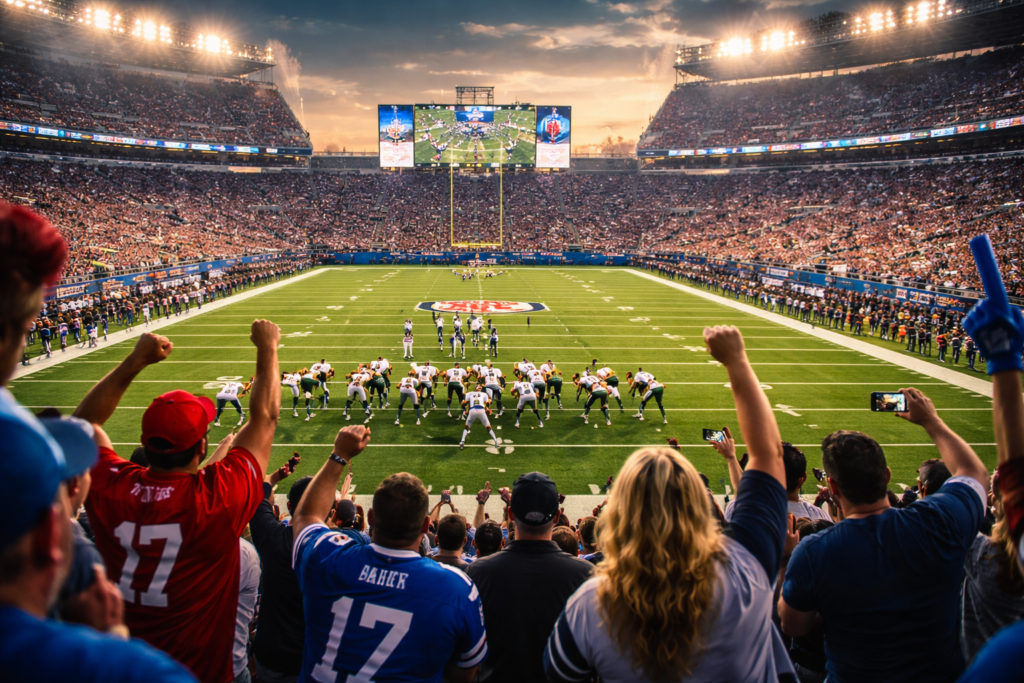
If you’ve been following the NFL for more than a few seasons, you’ve probably noticed that watching the game is no longer the whole experience. For a lot of fans, Sunday starts long before kickoff and doesn’t end with the final whistle. There’s injury news in the morning, draft chatter in the afternoon, group messages lighting up during warmups, and live reactions flying around as soon as something big happens.
Some people still prefer to sit back and just watch. Others treat game day like a shared digital event. They want to be part of the conversation, not just observe it. That shift in how people follow football has quietly pushed platforms to rethink how they build fan spaces online.
Game Day Has Turned Into a Multi-Screen Habit
It’s pretty normal now to watch a game with your phone in your hand. You might check live stats during a drive, look up a rookie’s background after a big play, or scroll through reactions when a call goes the wrong way.
This constant switching between screens has changed what fans expect from football content. Static pages feel slow. Updates that arrive late lose impact. People want information and interaction in real time. They also want spaces where other fans are present, reacting and debating in the moment.
That’s part of why community-driven platforms tend to stick. When fans feel like there are real people on the other side of the screen, they come back. It feels closer to watching the game with friends, even if those friends are spread across different cities or countries.
How New Fan Platforms Are Being Built
A lot of the newer fan platforms that pop up around football don’t look that different on the surface. You join to follow discussions, react to games, or take part in interactive features during big moments. What’s happening underneath the hood is rarely the reason people sign up in the first place.
Most fans are there because the platform offers something useful. That might be better discussion spaces, features that move with the game, or digital content that connects to teams and players in a more engaging way. The technology powering it all is almost invisible unless you go looking for it.
Fans who are curious about how Ethereum is being used across interactive digital platforms can click here to explore how these systems work in practice.
For most users, the details don’t matter much beyond one simple question. Did the platform add something to their game-day routine? If it did, they would keep using it. If it didn’t, they move on without thinking twice.
Why Blockchain Keeps Finding Its Way Into Fan Platforms
Blockchain sounds like something meant for finance forums, not football talk. But the idea behind it is fairly simple. It creates shared records that don’t rely on one central system to decide what counts and what doesn’t.
In fan communities, this can be useful in quiet ways. Digital items linked to teams or moments can be tied to individual users. Participation in certain features can be tracked in a consistent way. Over time, this builds a sense that what you do on a platform actually sticks.
That sense of continuity matters to fans who invest time in following the league. Football is built on records, history, and moments people remember for years. Digital platforms that reflect that idea tend to feel more natural to long-time supporters.

Live Games Feel More Like Shared Moments
Big plays don’t live in isolation anymore. The moment a long pass lands or a late interception happens, phones light up. Messages fly around. Clips start circulating. Reactions stack on top of each other in real time.
Some platforms lean into this behaviour. They build features that move alongside the game instead of lagging behind it. Fans can follow certain moments, join themed conversations, or take part in small interactive elements that update as the game changes.
For people who already enjoy breaking down plays or tracking player performance, this adds another layer to watching football. It doesn’t replace the game. It just changes how connected the experience feels.
Digital Items and Long-Term Fan Presence
Collecting things has always been part of being a sports fan. Old tickets, signed gear, team merch. Digital spaces are starting to mirror that habit in their own way.
When digital items are tied to individual users in a clear way, they become more than decorations on a profile page. They turn into small markers of participation and history. Over time, a fan’s digital presence starts to reflect how long they’ve been around and what they’ve engaged with.
That sense of continuity can make online communities feel less disposable. Instead of dropping in and out without any lasting trace, fans build a presence that carries across seasons. For people who follow the NFL year after year, that kind of long-term footprint makes sense.
What This Means for Football Media
Sites that cover the NFL Draft, player development, and league news are paying closer attention to how fans actually use the internet now. People don’t just read one article and leave. They move between updates, discussions, and live reactions.
As a result, football media is slowly shifting toward more interactive formats. The goal is not to replace written analysis, but to surround it with spaces where fans can talk, compare notes, and react together. Blockchain-based tools are just one part of that wider trend.
What really matters is whether fans feel like the platform fits into their game-day routine. If it does, they’ll make room for it. If it doesn’t, it fades into the background with the rest of the internet noise.
Football Fandom Is Still Changing
The way people follow the NFL today looks very different from ten years ago. Draft coverage moves faster. Player news spreads instantly. Conversations don’t wait for the next day’s recap.
The tools fans use will keep changing too. Some of those tools will be built on technologies most people never think about. What fans care about is simpler. Does this make following football more engaging? Does it help them feel connected to the game and to other fans?

If the answer is yes, the platform sticks. If not, fans move on. That’s the real filter that shapes what becomes part of the modern NFL fan experience.